Built for Claude Code
The SaaS starter your AI agent can’tget wrong
Stop reviewing your agent’s architecture and start reviewing your product. The foundation is built, and the guardrails keep it that way.
Founder pricing for everyone on the list, plus the build log on the way there. One click to leave.
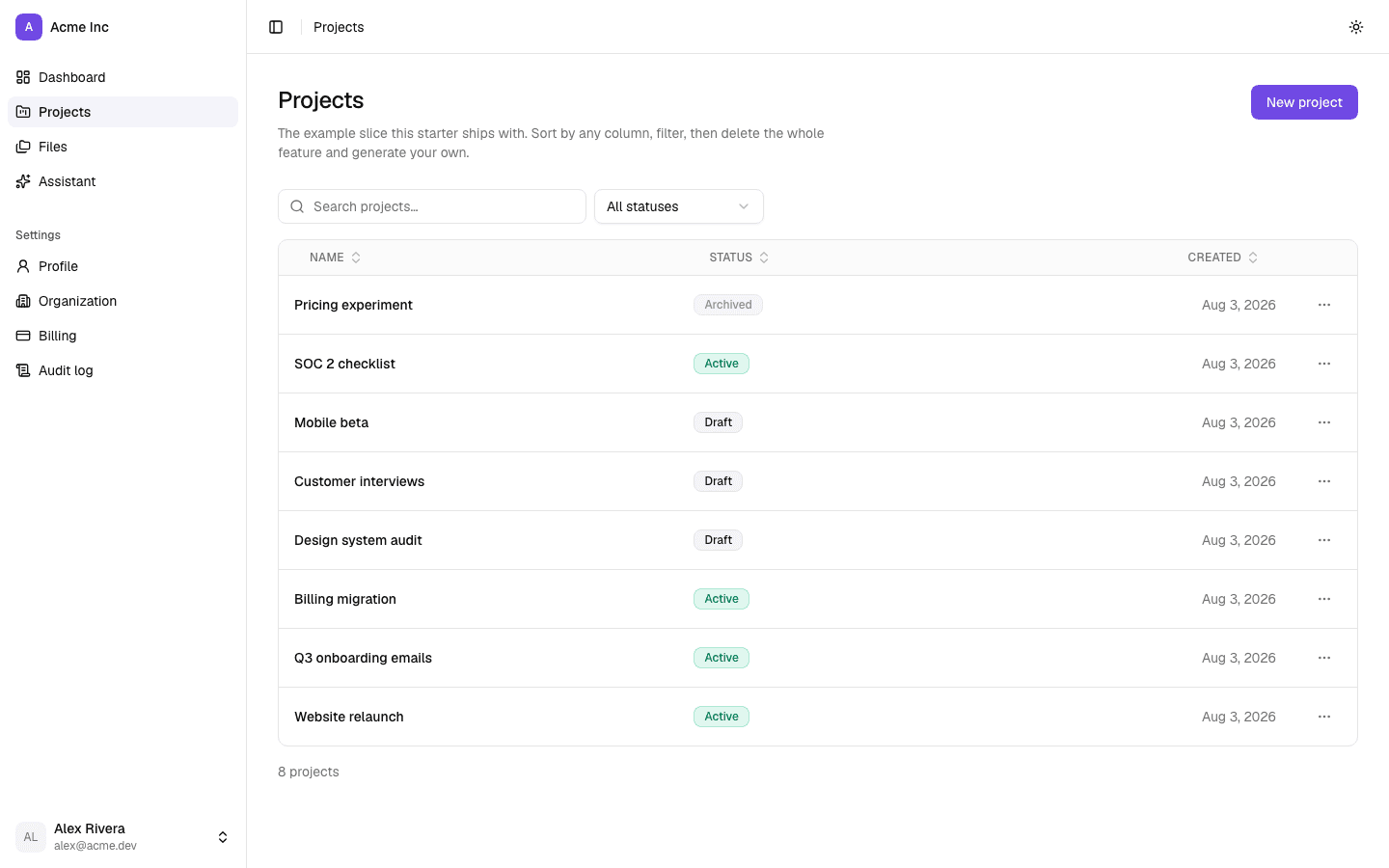
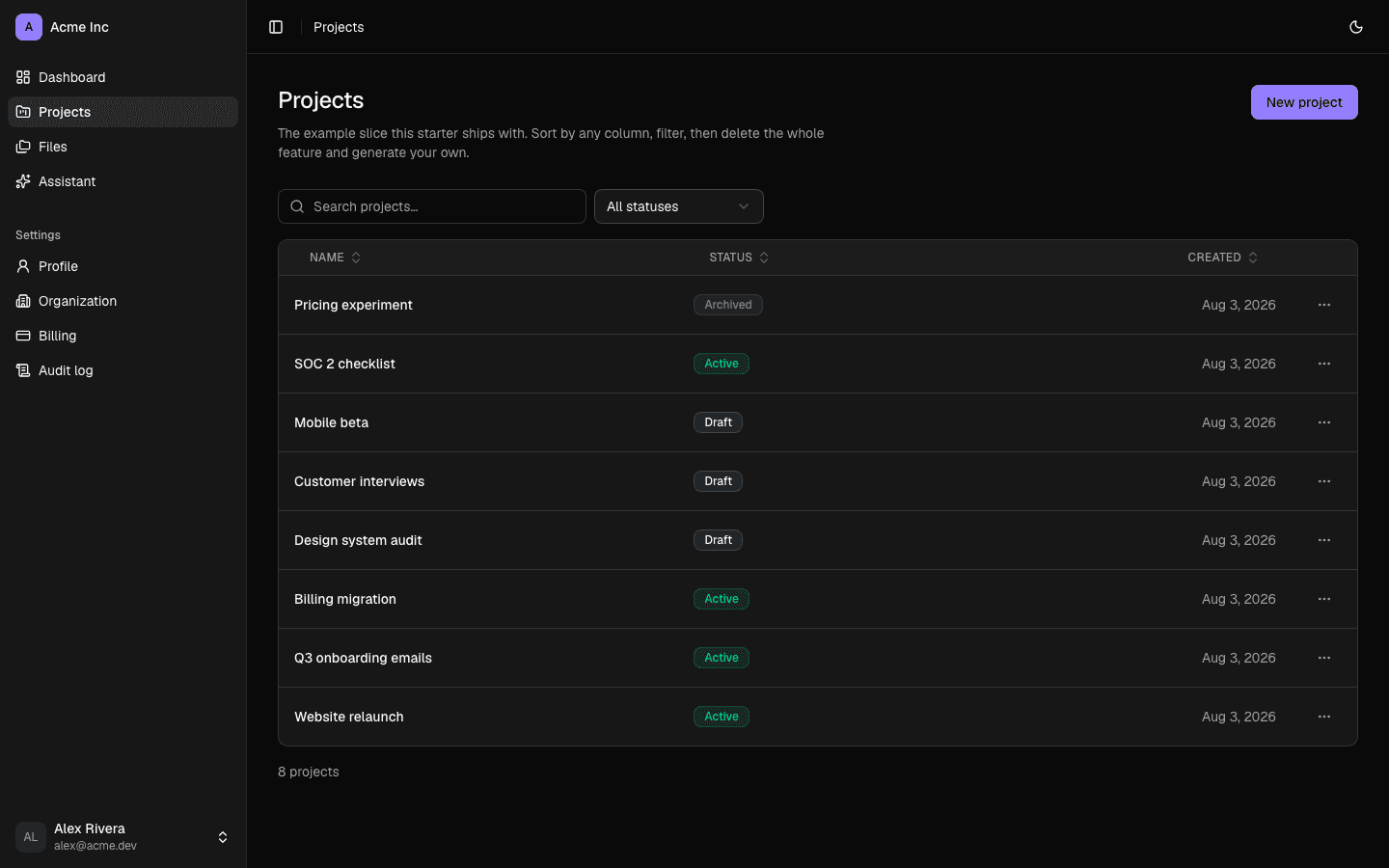
- Next.js 16
- React 19
- TypeScript
- Tailwind 4
- Better Auth
- Drizzle
- PostgreSQL
- Stripe
- Resend
- Inngest
- Playwright
- Vercel
Why this one
Conventions your linter enforces, not your README
An agent is only as good as the codebase it works in. A blank repo makes it invent an architecture. A documented one lets it drift a few files in. This one makes drift fail the build.
- Generators, not snippets to paste
lq generate feature invoicesOne command writes the schema, the tenant-scoped queries, the typed actions, the form, the route, the migration and the tests. Your agent fills in the business logic. It never has to guess at structure.
- Checks that fire while the agent is still typing
lq check --changedWired to a PostToolUse hook, so a broken convention surfaces in the same turn instead of in review three hours later. Import the database from a page and it stops — and names the command you should have run.
- Tenancy that Postgres enforces
row-level security on every tableEvery generated table ships an RLS policy and an isolation test. Forget a where clause and you get zero rows, not somebody else’s customers. Discipline is optional. The database is not.
- Updates that reach code you already wrote
lq upgradeA known shape is what makes codemods possible. CI scaffolds a project, upgrades it onto the next release and runs its suite — proving the plumbing you have not touched gets replaced and the files you have edited do not.
Not on sale yet
Pay once. Own it forever.
One purchase, one repo, yours to edit however you like. No subscription, no seats, no usage tier. What’s different is what happens afterwards: because your code keeps a shape we can recognise, updates keep arriving.
Lifetime license
One developer. Unlimited projects.
$249
- Feature generators — schema to tests in one command
- Guardrails: custom lint rules, module boundaries, architecture tests
- Claude Code skills and slash commands, plus design and copy skills
- An upgrade path that reaches code you already generated — managed-file tracking, lq upgrade, and a codemod runner for the releases that need one
- Orgs, roles and invitations, isolated by row-level security
- Better Auth, Stripe subscriptions with plan entitlements and usage quotas, Resend
- Background jobs, file storage, rate limiting
- Private repo access and lifetime updates
Nothing to pay today. Join the list and the founder price is yours when it opens, plus the build log on the way there.
$249 is the founder price, for the waitlist. It goes to $349 at launch.
Before you buy
Questions people ask before buying
The four things people actually ask. If yours is not here, the answer is probably in the docs — and if it is not, that is worth telling us.
How is this different from any other SaaS starter?
Every starter hands you a working app. The difference here is what happens on day thirty: the conventions are executable, so a generator writes them, a check fails when you break them, and a skill explains them to your agent. Nothing important lives only in a README.
What happens when the template changes after I buy?
`lq upgrade` replaces the plumbing you have not edited, lists everything you have, prints the diff on request (`lq upgrade --diff`), and never overwrites your work. CI runs that upgrade on a freshly scaffolded project every commit and fails if an edited file is clobbered or the project stops passing `lq check`.
Do I have to use Claude Code?
No. Everything works as an ordinary Next.js codebase, and the checks run in CI whether an agent is involved or not. The agent surface is what makes it faster, not what makes it work.
Who is this NOT for?
Anyone who wants to choose their own stack. There is one blessed path — Postgres with row-level security, Drizzle, Better Auth, server actions — and the value comes from that path being enforced. If you want to swap the ORM, this will fight you.
Ship the product, not the plumbing.
Join the waitlist and the founder price is yours when it opens, plus the build log on the way there.
Join the waitlist